Tuesday, August 20, 2019

Carlsbad Raceway


There they were, aged remnants of the competition, standing like old soldiers waiting their final resting places, to be remembered only by those who experienced the thrill of the race.
 
 At an earlier time, it was a manly pursuit of personal pleasure, speeding down a narrow asphalt drag-strip in a speeding contraption, passing adoring fans at the 1/8th mile pole, toward the finish line, trying to shave off a second or two from their personal best time. 


And it was a place for motocross racers riding over the humps and hills, digging into the dusty curves like surfers riding a difficult wave toward their own triumphs, as the dirt swirled up like a mini dust storm from waves of bikes chasing each other, like dueling hummingbirds, now had long laid down and covered the evidence of what had been.


But now there was an eerie quiet where fans once cheered, where the sound of roaring engines came to life, where the smell of gasoline, nitro-methane fumes, and hot oil wafted over the crowd, and rubber tires screeched against the hot pavement propelling pride to the checkered flag. 


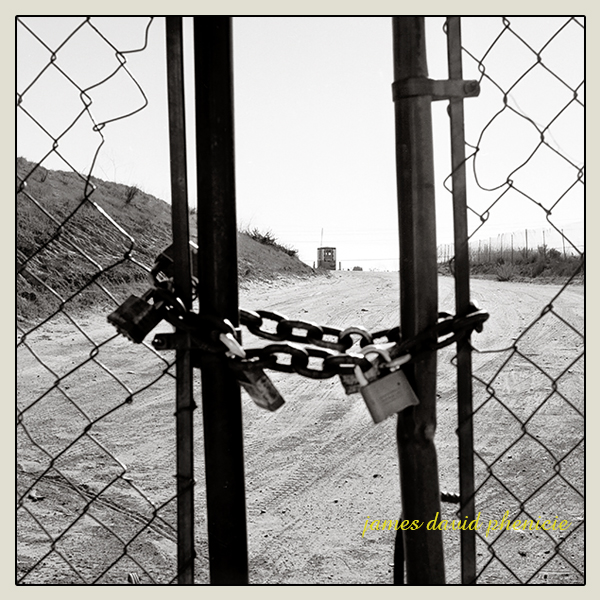
A hand-painted sign at the entrance of the old racetrack reminded fans that it was now closed. Chains and locks prevented passage.  The ticket booth with its “Stop” sign would no longer be in command of the crowd.  Even the snack shack leaned against time, empty and out of sweets, and tall, swaying weeds were the only spectators poking up through the crumbling bleachers. 


Discarded rubber tires were stacked on the track like tombstones to remind drivers that the “end” was near.   The control tower, long abandoned, stood tall above it all like a lone sentinel watching over his province.  And a rusting van advertised the “Carlsbad Raceway” in faded letters, hidden in tall grass where no passerby would see it.


No longer are sleepy Sunday mornings interrupted by the sounds of excitement and fun, of mechanically engineered rumbles and reverberations, and a loud speaker barking out the results.   The covenants which nearby homeowners were required to sign, alerting them to raceway impact issues, no longer applied.  


It is all quiet now, save for the hum of the increased traffic which flows steadily along the airport road, situated above the remains of a past vestige, racing toward new destinations.  The ruins of the old raceway are long gone, replaced by cold, hard concrete and shiny shimmering glass with the symmetry of planned development.  It is progress, they said.

Now, all that’s left is a modern postmark which incorporates a bygone era with a new direction.  It is a sign near the site of the old asphalt track which announces:  Carlsbad Raceway Business Park.

 
  Author's note:  These images were taken in Aug/2008 by the author who used a Rolleicord and Holga film cameras.  The Dragstrip and Motocross divisions of the Carlsbad, CA raceway ceased operations in 2004.
 

Wednesday, August 14, 2019

Fine People on Both Sides


So for the first time, I've had a video banned from YouTube (I guess this makes me "infamous.").

A little background on this video: In May/2019 I saw a commercial being run by former VP Biden accusing President Trump of racial hatred and fanning the flames of division by proclaiming that there were "Fine People on Both Sides."

I decided to do some investigation on my own by collecting all the photos, videos and statements I could find and then produce, from open source media, a video which could speak to the horrible moments in Charlottesville, VA in Aug/2017. 

I think I did a very credible job with the facts as they were presented and the video represents a thumbnail of that ugly day. I wasn't there. I didn't take the pics or video. I simply took the words of the two leading politicians and put them to the "music" of that day.

So YouTube has band this video for the violation of promoting hate!  The images and footage came from news sources and directly from YouTube.  Shame on you YouTube... your censorship is egregious. I guess I'm in good company.

Have you noticed in the last week the hate and vitriol that is being spewed by politicians... and once again, the issue of Charlottesville is being relived.

My friends, this video is not about the propagation of hate: it is the reality of the moment, the news of the day, the civil war that is going on in our country. It is right here for you to see. It is a documentary of what happens when we lose the sense of who we are, our values and what made our country great.

Do me a favor, watch all 7 minutes of this video and if you care, share it with your friends. Censorship is a dastardly infection that is spreading in our nation... and it won't end well.
[CLICK on the play button and it will link you to the Vimeo site where you need to then hit play again to run the video. Thanks.]

https://vimeo.com/335538207


Tuesday, March 21, 2017

The Hills Are Alive...

Walking through the trails and hills of Southern California, a song stirred up in my soul:  "The hills are alive with the sound.... er sight of beauty...!"  Ok, so that's not exactly how the classical song  goes, but you get the idea.

The point is that California, and more specifically Southern California, has been blessed this fall and winter with an abundance of rain.  Over the last five years we have suffered a severe drought, which included a year of water rationing.  That is over now.

And along with all that rain comes the resulting spring "supper bloom" of wild flowers which happens about once every ten years.    With the great quantity of rain annual plants are now germinating all over the area providing a splash of color in an otherwise drab landscape.  Everything is lush right now; green grasses on the hillsides and in the canyons are smudged with the colors of the rainbow in natures most delicate art form: the flower. 

And to this spring bloom tourists are drawn like a bee to nectar.  They are everywhere enjoying the bountiful beauty which nature provides.  The following images were taken this past weekend at the Diamond Valley Lake near Hemet, California.

                          (California orange poppies with Diamond lake in the background.)

                            (A cluster of California poppies sprouting from a rock formation.)


                                            (Arroyo Lupine with California Poppy accents.)

                   (Hikers walking a trail with snow covered mountains in the background.)

                           (Canterbury Bells with the morning sun kissing the front cluster.)

                                                 (California Poppies -- the State flower.)

                                                  (Arroyo Lupine in the morning light.)

                      (Tourist with purple umbrella surveying the hills filled with poppies.)


Sunday, January 29, 2017

Graceful Mass

Along the southern coastal areas of the United States a large, but yet graceful  mass of a bird can be found residing in flocks, crowding about on ledges and spaces along the pacific ocean beaches.  It is the Brown Pelican (Pelecanus occidentalis).  This large bird mainly eats fish, as it dives beak first into the ocean waves to catch its prey.

In Southern California, not a day goes by that I don't see a flock of brown pelicans soaring along the coastline in a follow-the-leader formation.  Often times, they will divert out over the ocean a bit, just barely clearing the heads of perched surfers waiting for that one special wave, as the big birds look for food.


In La Jolla, CA, there is a special area where the brown pelicans love to perch in colonies to sun and clean themselves.   La Jolla Cove is a semi-protected area of rock formations which gives the flocks of pelicans a place to land and preen.


A numbers of species of birds such as the egret, Cormorants, and a variety of seagulls all fight for the limited space with the pelican to rest and groom themselves.


The brown pelican is an interesting bird to observe.  The agility of the pelican's neck to bend and cork-screw about his body to preen is amazing to watch.  The large beak helps as he separates the feather to search out the bugs and other objects which he plucks.


Out on the edges of the water, among the rocks, the harbor seals bellow at one another as a pelican is on short final for the edge of the rock while seagulls pay no attention to the intruder.


The brown pelican has a beautiful plume with various colors on its head. Some have a red area on the gular pouch.


But it is the flying and flight maneuvers such as the landing which fascinate me:  the big soaring wings with deep slots at the end of the primary feathers are used to precisely land the large mass of the bird.


The up swept and vertical wing helps the pelican slip through the air just before it opens its wing to almost hover down onto the landing point.


As with anything in the day in which we live, it takes a bit of time and observation to see the marvelous and glorious creations about us.  The brown pelican is just one of those amazing creations which deserves the time to stop and consider its magnificence.


Monday, January 2, 2017

Caño Negro Wild Life Refuge


Located near the Nicaraguan border in a marshy, jungle-like area, the Caño Negro Wildlife Refuge is a wonderful place to visit while staying in Costa Rica to get a sense of the expansive habitat and ecosystem that evolves in that important part of Central America.  

A float trip down the flooded Rio Frio doesn’t actually place you inside the wild life refuge but it gives the nature enthusiast access to all the birds, animals, reptiles and monkeys which are found within the actual sanctuary, as they inhabit the banks and canyons along the river.  

The little village of Los Chiles, about 2 miles from the Nicaraguan border, is about 2 hours’ drive from La Fortuna, located in the Arenal Volcano area.   The road to Los Chiles is hard-paved but once you get to the turnoff at the Immigration checkpoint, be prepared for a wash-board ride on a bumpy gravel road.  For about 20 minutes, as we slowly jostled along the road, we passed flooded marshland which held the occasional herd of cattle and the requisite flocks of egrets hanging about.  When we arrived at the river, there was a little restaurant where there were two river boats tied waiting for passengers. 

During our tour in late December, the rainy season had not stopped and the banks of the Rio Frio were overflowing into the lowlands.  The current of the river was rather swift and several times during the float, the heavens opened with a rain shower reminding me that the first word in “rainforest” is “rain.”


The boat captain and the guide were extremely knowledgeable and diligent as they searched along the banks for interesting birds or animals.  Here are just a few which they found:


The large iguanas were perched up in the trees sunning themselves whenever there was  break in the clouds.


We saw the tree species of monkeys along the banks of the Rio Frio:  Howler (1st image), the spider, and then the white-faced monkey (image 2 and 3).   The last image is of the two deciding to "attack" the boat when they realized we were sitting there observing.  Gave everyone a "cheap" thrill!


Or should I say a "scare" because of the amount of noise they made and their sudden aggression.


And of course the birds were plentiful along the swollen banks of the river.  Their plumage and beauty was breath-taking.


The Caño Negro Wildlife Refuge is a "must see" if you are in the area while enjoying a vacation to the Arenal Volcano area.